
Rooted in horticulture: rebuilding the Beit Courtyard
A tired courtyard at the heart of Imperial College London, kept open and busy throughout,
rebuilt in six weeks into a forageable garden for the whole campus community.
Reimagine Works, main contractor · Design by J&L Gibbons ·
Imperial College London · South Kensington ·
Completed June 2025
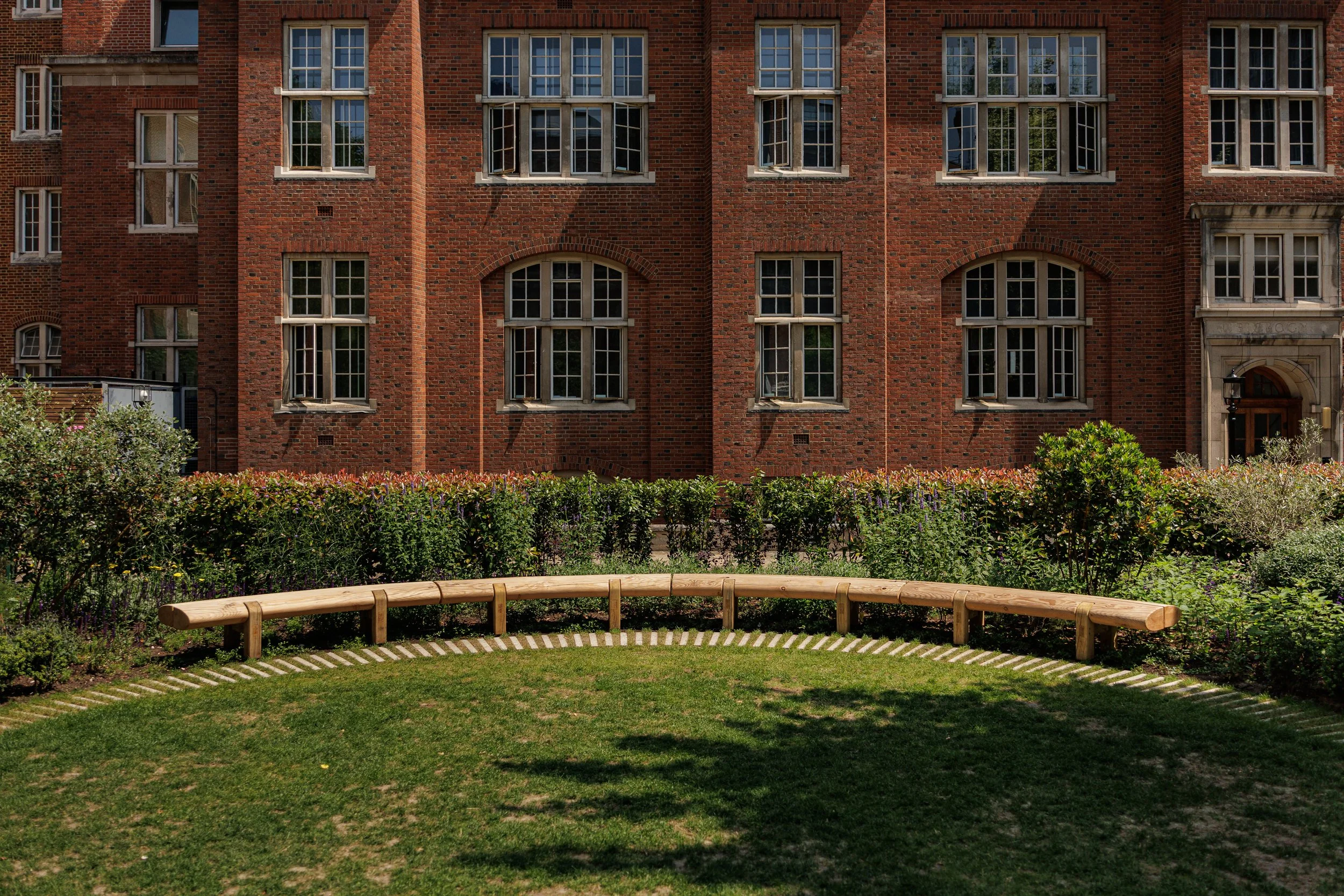
Beit Courtyard sits at the centre of Imperial College London's South Kensington campus, beside the Student Union and reached from Prince Consort Road. It is a shared space, used every day by students, staff and the public. Working to a design by the landscape architects J&L Gibbons, our brief was to turn a worn, compacted courtyard into a welcoming garden that respects its historic setting, planted for year-round interest, biodiversity and low maintenance. The design team called the idea "Rooted in Horticulture": a courtyard with a genuinely edible, forageable character woven through its borders and trees.
"We couldn't be more delighted with our first Grey to Green project. It's been great to create quality space like this where they can come and relax outdoors in nature. Ben and his team have done an amazing job at executing Jo's vision."
Jane Hay
Deputy Chief Property Officer, Imperial College London
PROJECT FACTS
-
Working closely with Project Manager, Laszlo Radva
-
First project working alongside Jo and her talented team.
-
First foray into commercial development having worked primarily on residential projects.
-
High profile location next to The Royal Albert Hall.
-
Kept to schedule despite site based challenges.
-
Effectively managed the entire Courtyard.
-
Total value of works exceeded £150k.
-
Mixed use Education and Public courtyard.
A courtyard kept open
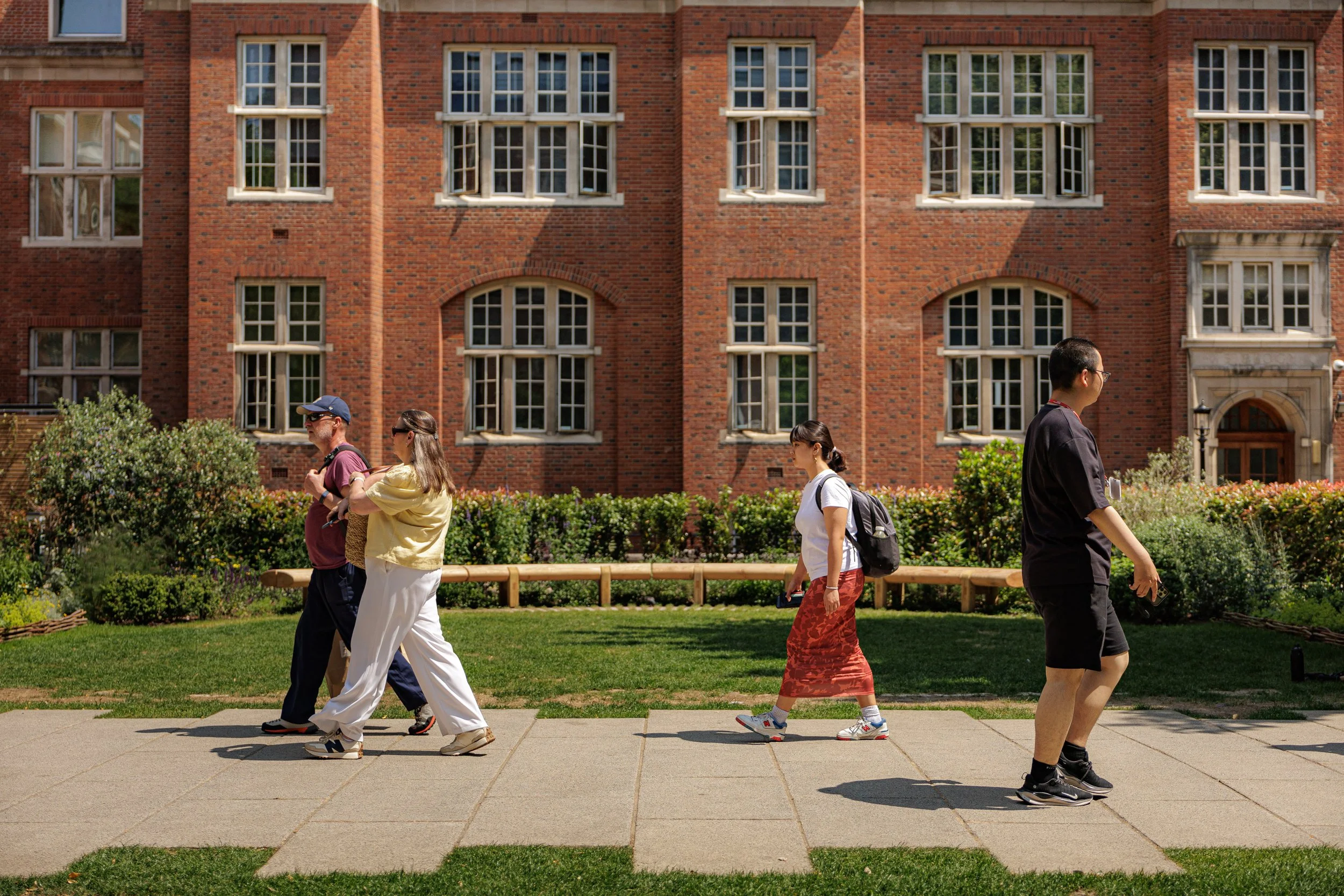
The hardest part of this job was the setting, not the build. The Student Union bar opens straight onto the courtyard, and the Union was clear that it wanted the space kept as open as possible while we worked. We treated that as a constraint to design around rather than push back on. As the work moved through its stages we reconfigured the segregation line three times, screening the works with Heras fencing and scrim while handing back as much of the courtyard as each stage allowed, and we helped develop clear stage-by-stage signage so users always knew what was open and how to move around us. The courtyard stayed in use throughout, and the Union kept trading.
Getting everything in
The only way into the courtyard was through a section with a low ceiling and a limited spot loading weight, so nothing heavy or bulky could be brought in as a standard delivery. Every material and every load of waste was broken down into bulk bags, palletised, and moved through on a large electric pallet truck. Deliveries were sequenced and sized to stay within the loading limit. It was slower per trip, but it protected the building fabric and kept a tidy, controlled operation on a sensitive site.
Materials and planting
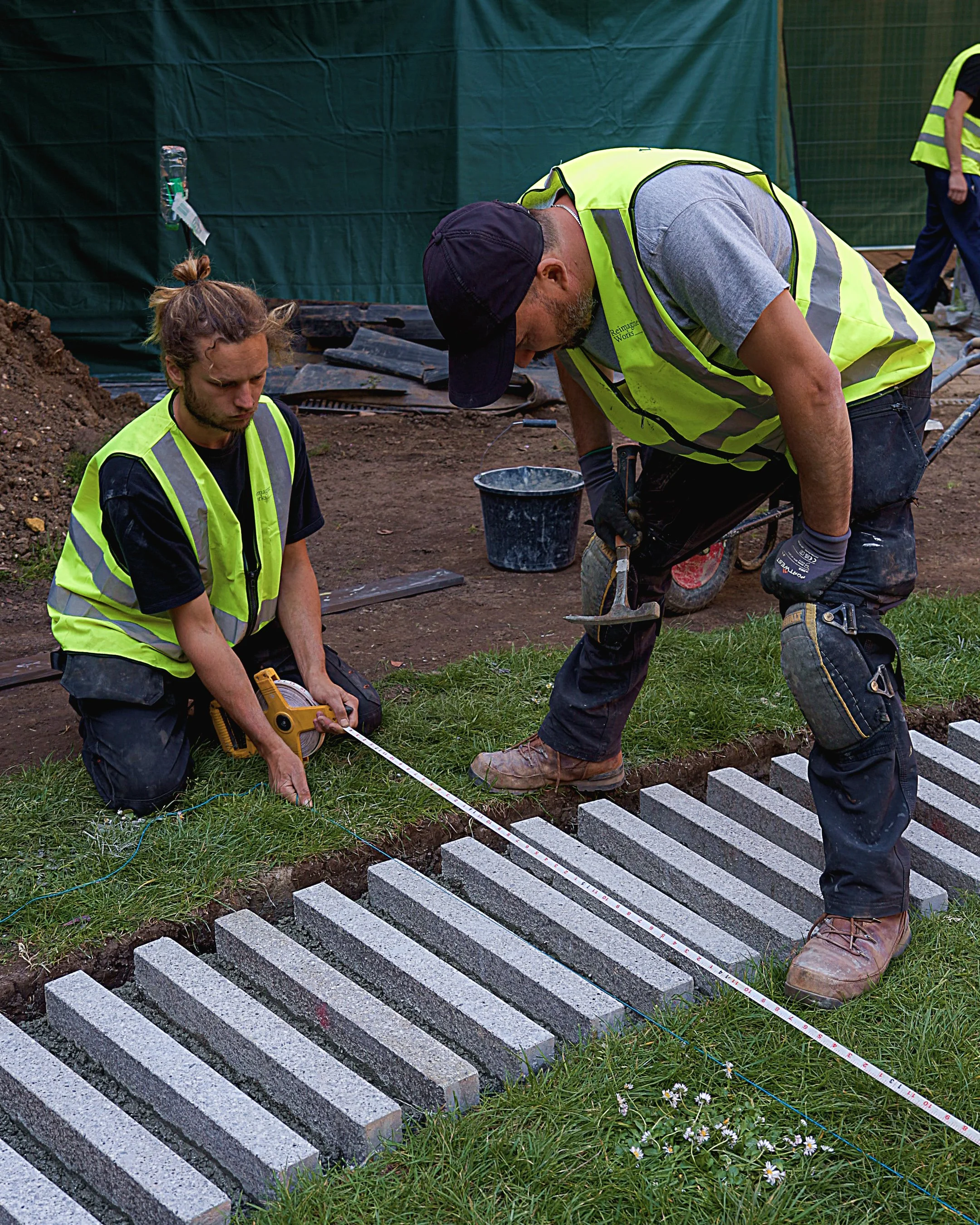
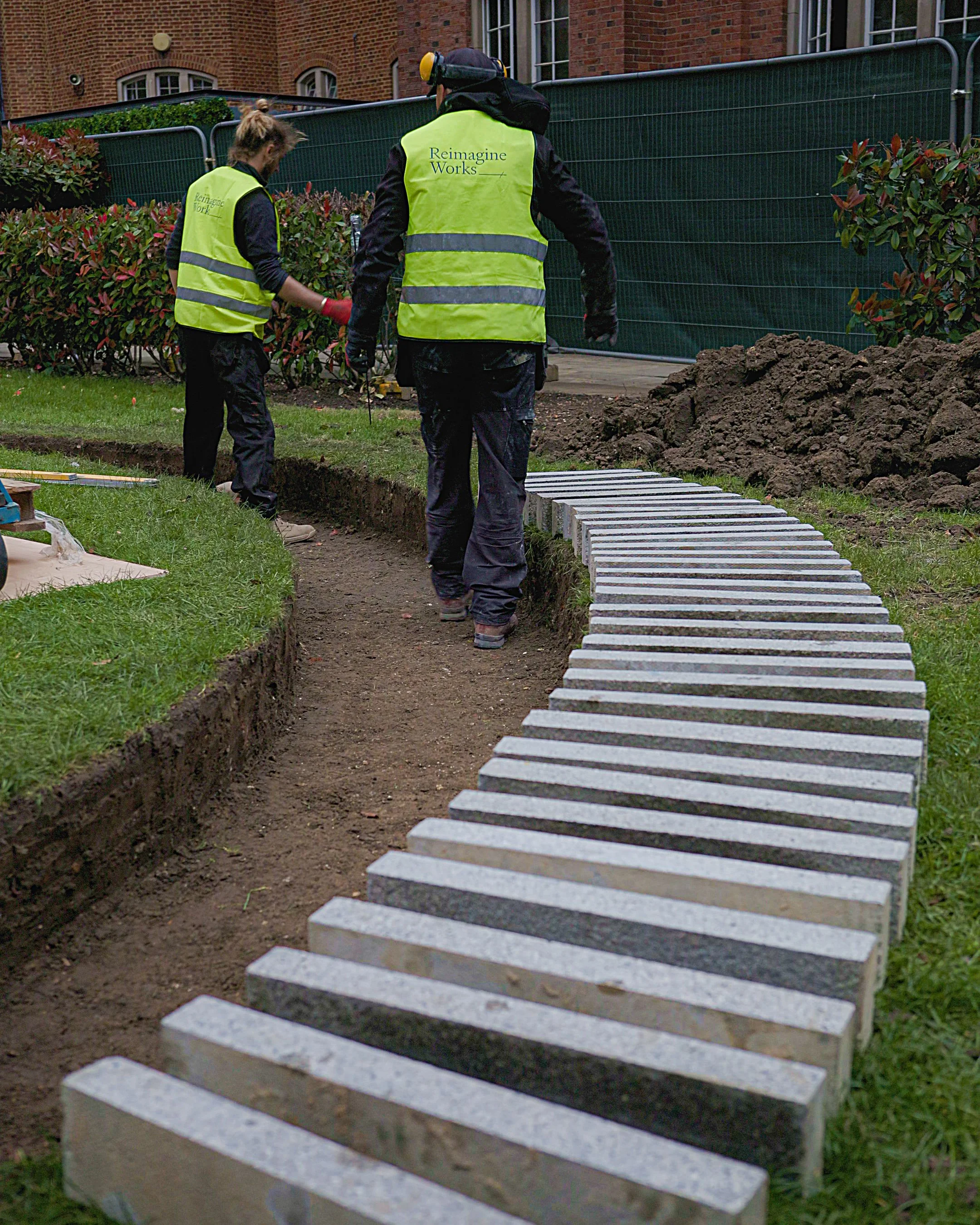
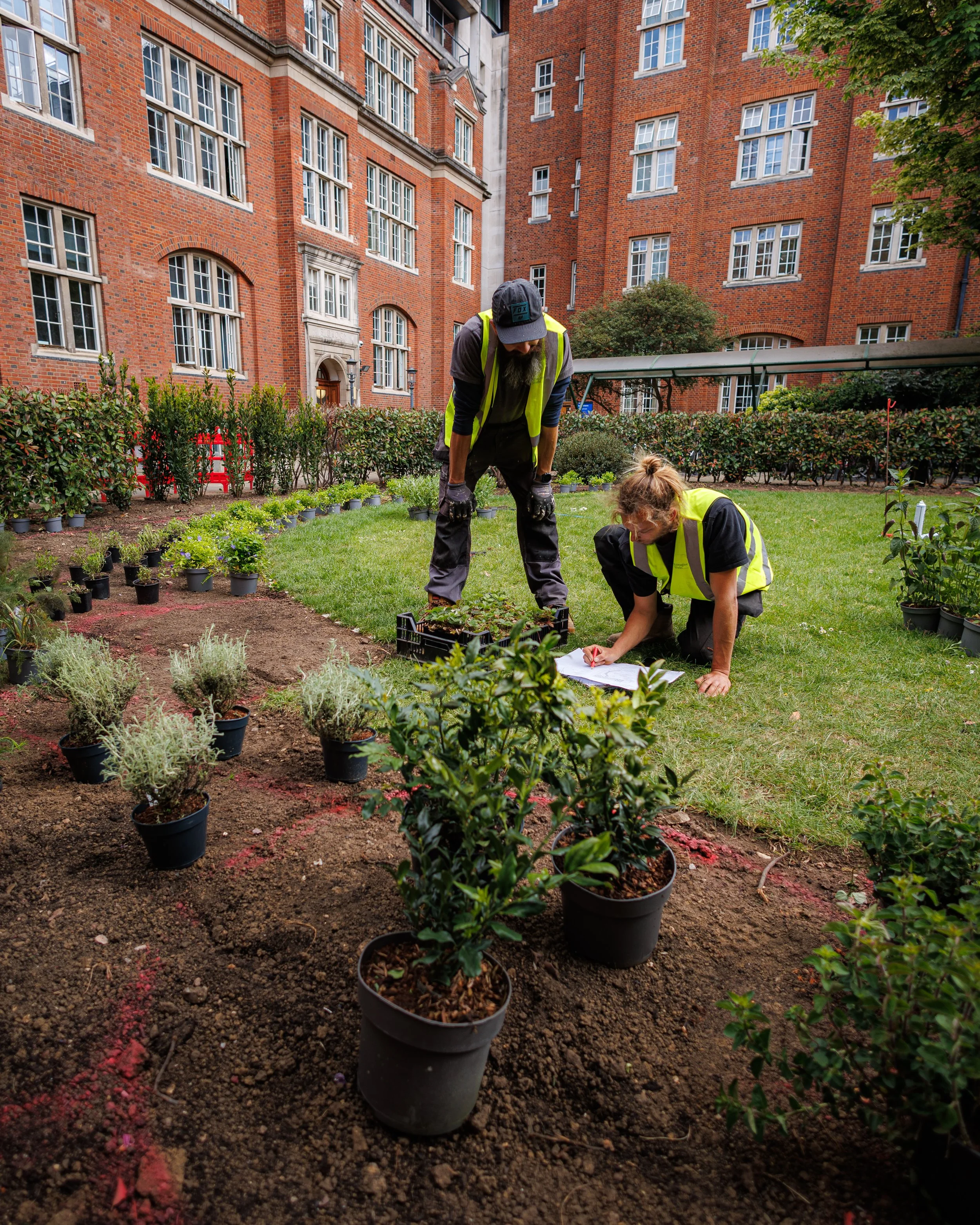
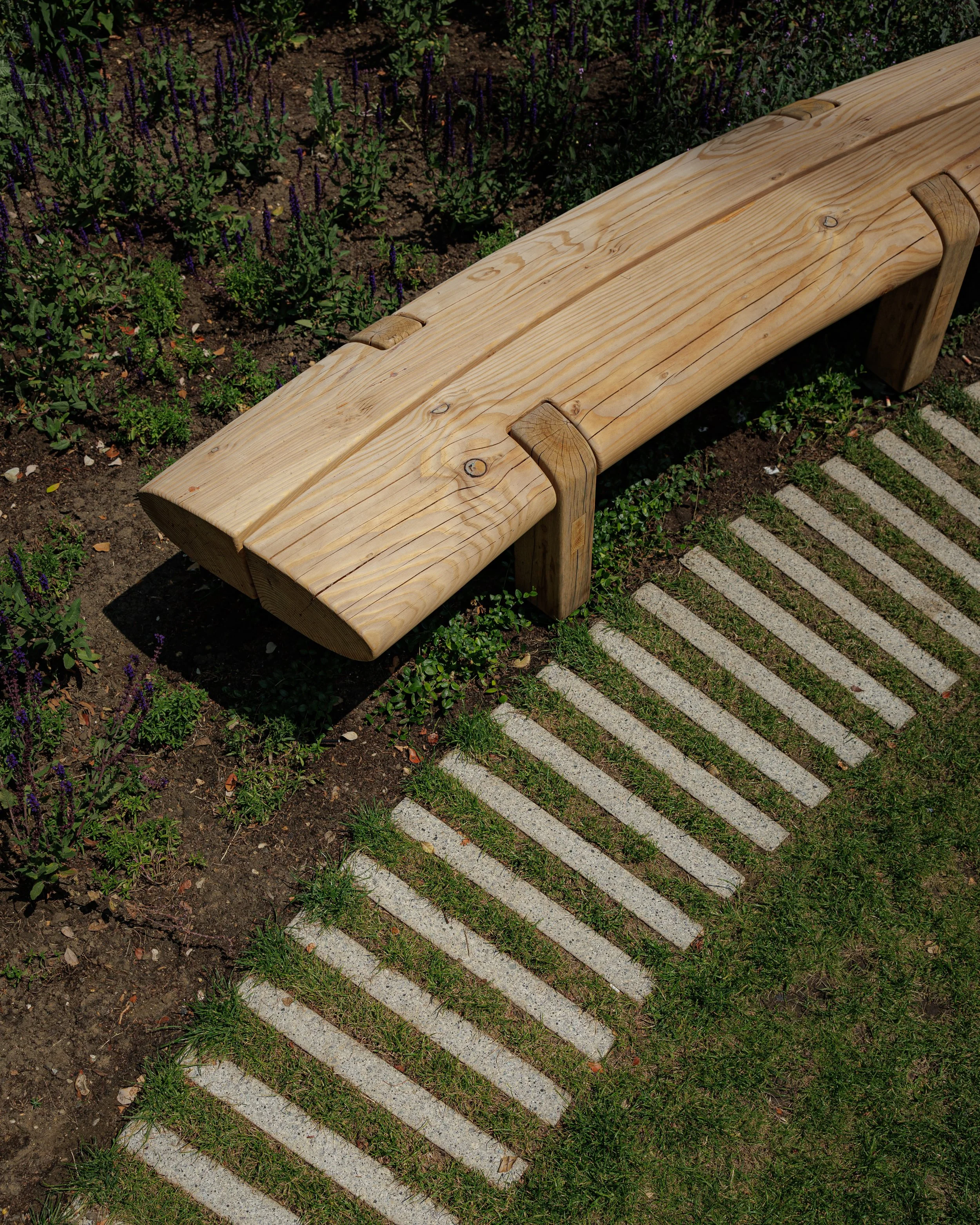
The palette is deliberately edible and aromatic. Wild strawberry, fennel, marjoram, rosemary and sage run through the perennial borders, alongside Salvia, Echinacea, Verbena and Achillea for long season and pollinators. The trees carry the forage theme further: quince, sour cherry, strawberry tree, feijoa, hazel and olive. The hard works are quiet and careful, recycled precast slabs laid on edge, treated-softwood edging and a low hazel border fence set to tight radii, jointed with a permeable Steintec system for free drainage, and soil improved with PAS 100 green compost and decompacted by hand.
Setting out for the long term
Setting out was genuinely tricky on this site, so rather than re-strike lines as we went we sought out a more robust, longer-term approach. We established a permanent setting-out reference using chain and string, giving us a stable datum to return to throughout the build, a method we have since made our own. Setting out was carried out to J&L Gibbons' setting-out drawing and verified by the designer before we built, and the planting layout was developed with the design team through a planting workshop.
Manual working, site management
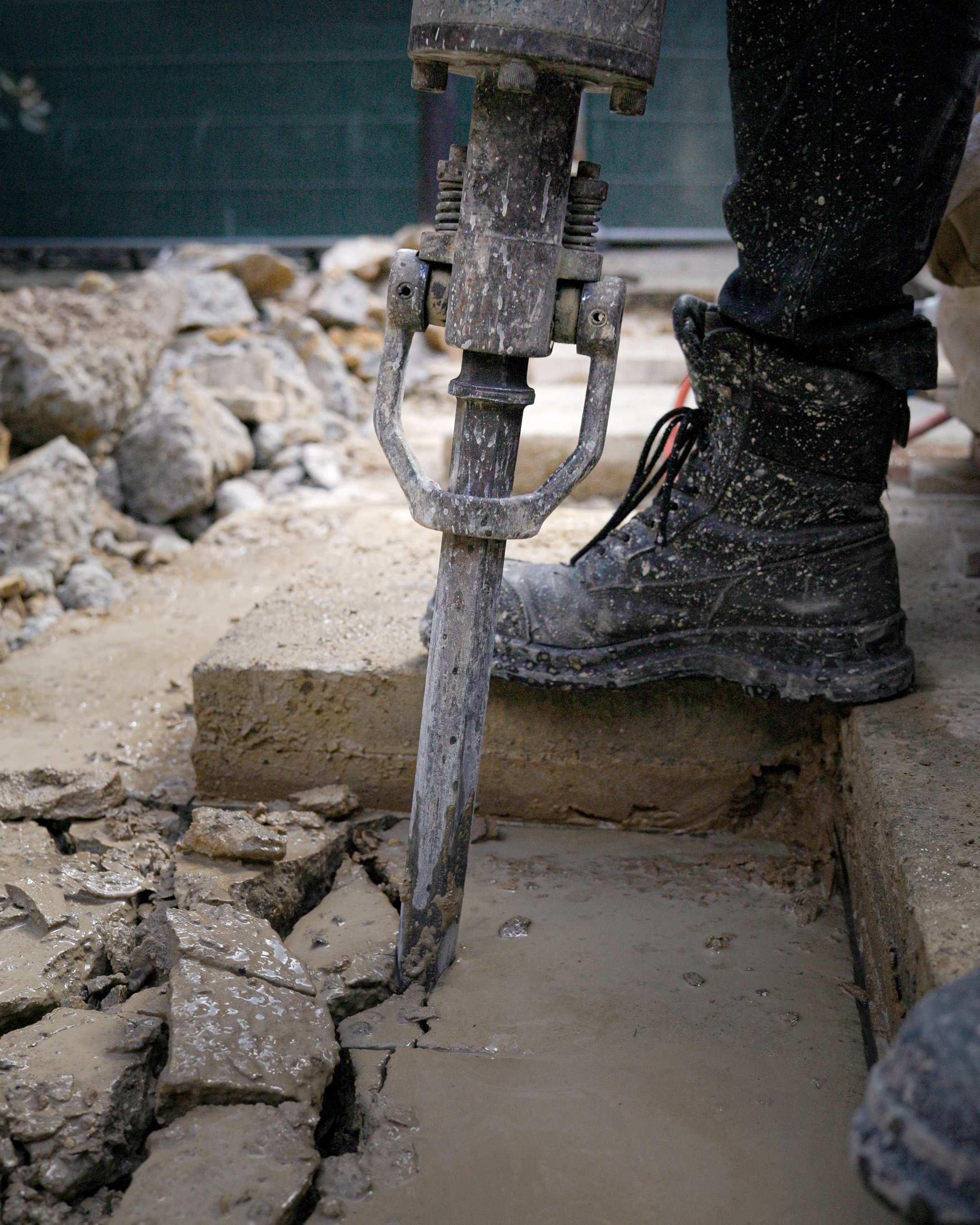
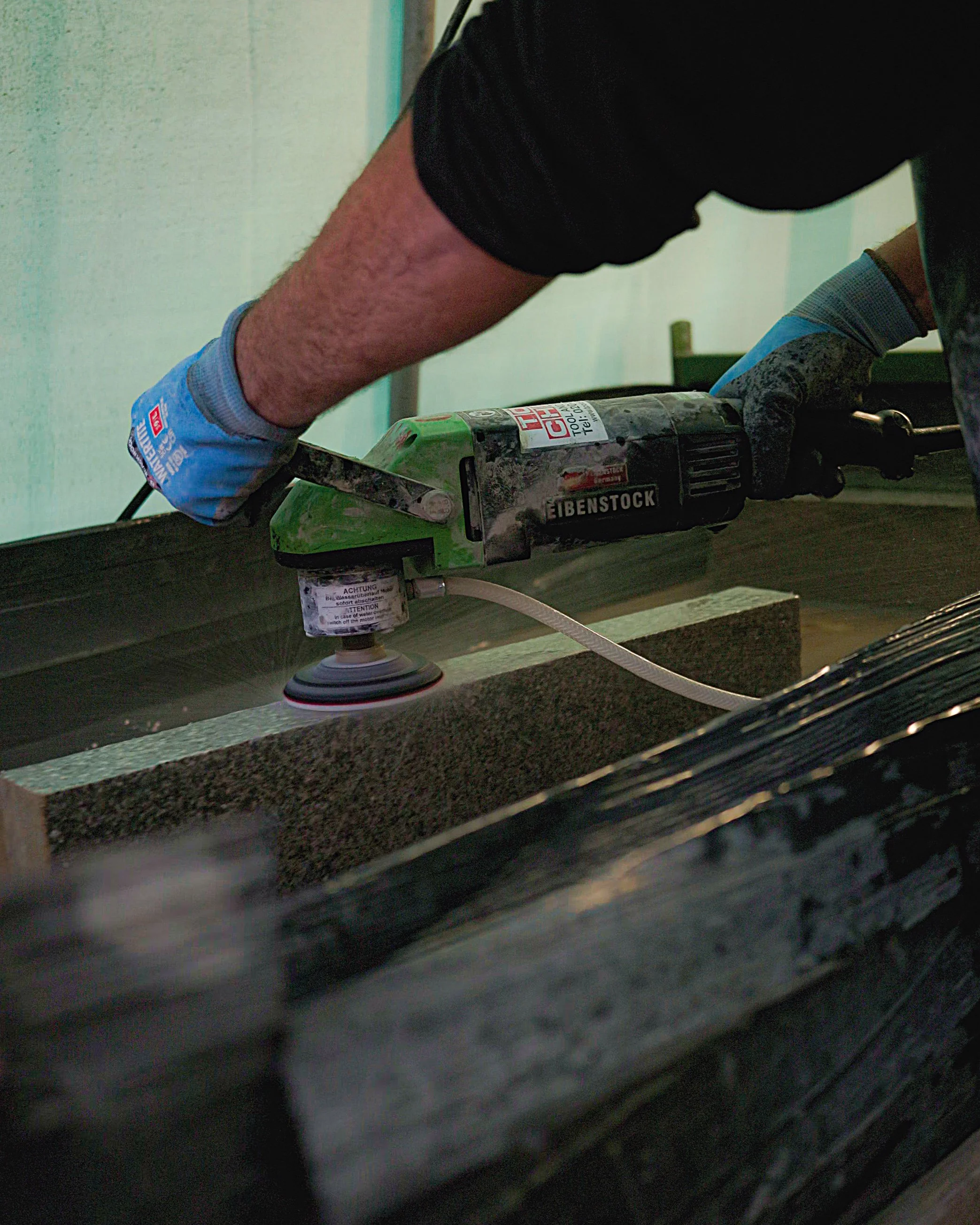
Because of the noise and loading limits, the 387 square metres of compacted ground were dug out entirely by hand rather than by machine. It was demanding, but it kept us within the campus's constraints and gave us close control as we worked around existing services and tree roots. We reused material won on site rather than carting it away: crushed demolition material became clean drainage aggregate in the tree pits, and we cut and processed timber and slabs inside a controlled tent, which contained noise, dust and mess and kept the rest of the courtyard clean and usable through compressed operational hours.
Safety
Buried services were surveyed by CAT scan, before any excavation, and the findings recorded in our health and safety pack. Imperial arranged its own subcontractors to divert the below-ground electrics, which was the right approach for a University asset but introduced delays outside our control; we resequenced our own works around the diversion and made the time back, so the overall programme held. The work was run under an SMSTS site manager with site-specific RAMS and a compliant health and safety pack documenting every stage.
The Bench
Central to the courtyard is a bespoke curvilinear timber bench, designed by J&L Gibbons and made by Jan Hendzel Studio from felled Douglas Fir with salvaged oak legs. It reimagines the seating of the historic bandstand that once stood on the site, framing the new garden rather than facing out. We took delivery of the bench, set it out and secured it on ground screws to a high degree of accuracy, avoiding a poured concrete foundation in keeping with Imperial's sustainability aims. The screw positions had to match the bench geometry exactly, with no scope to adjust a cast base afterwards. It is a small element, resolved properly.
"It is rare to find a contractor with an eye for and a belief in craft, and who finds pleasure in the process. Reimagine Works have been all these things while being proactive given a challenging programme in full view of the entire student body. Their intelligent approach has been refreshing and we are delighted with the transformation, as is the client."
Johanna Gibbons
J&L Gibbons
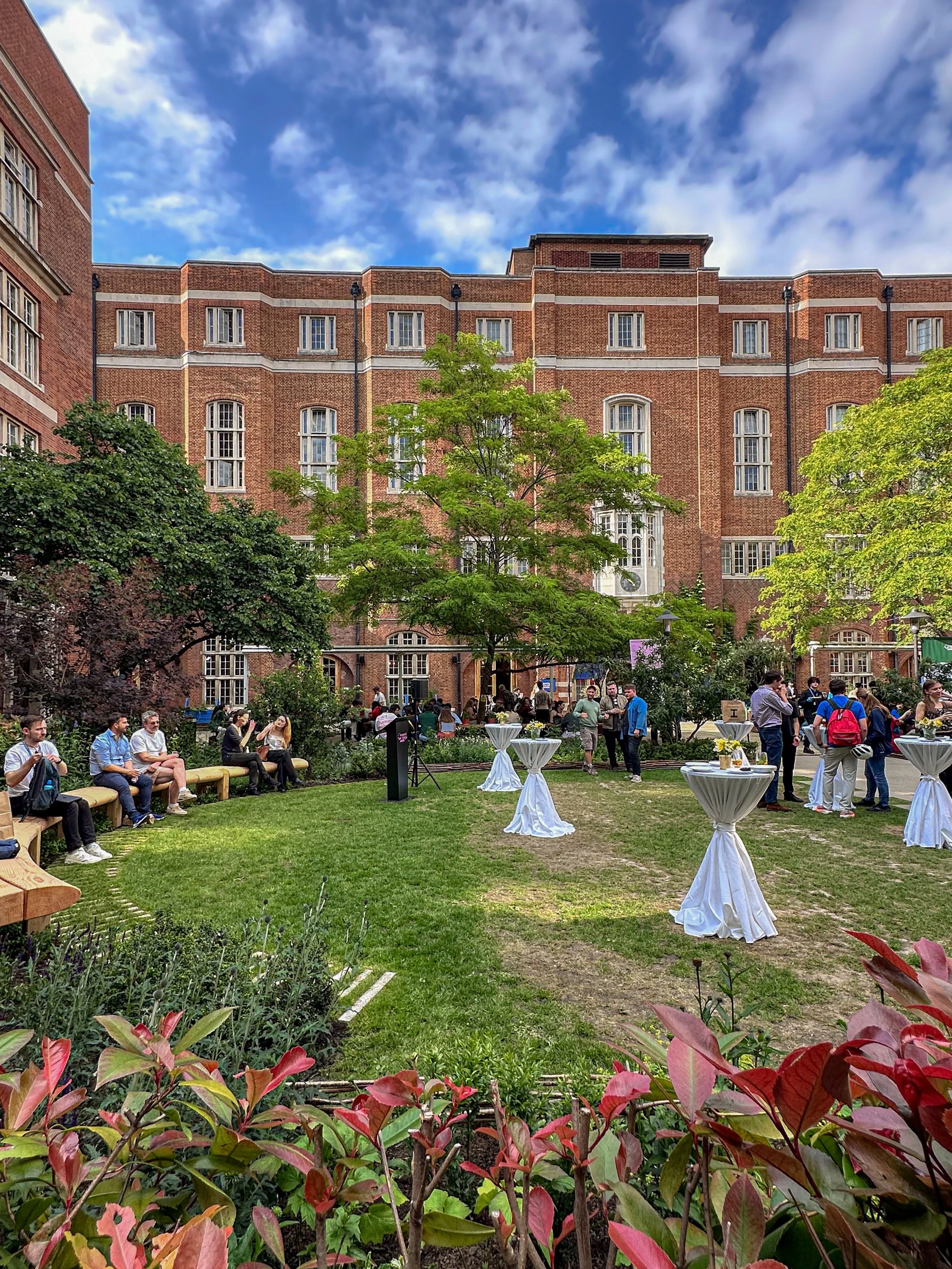
The result
Beit Courtyard was completed in 2025 and is now in everyday use, a calmer, greener space delivered faithfully to the designer's intent, on a modest budget, on a working campus. The scheme has since been recognised in the landscape and gardening press, including a feature in Pro Landscaper (January 2026). It has settled into the life of the College exactly as it was meant to.
Come and see it
We would warmly welcome the judges to visit Beit Courtyard and see the scheme in use. We would be glad to host the visit alongside the College, and to bring a representative from J&L Gibbons, so the design and its delivery can be discussed together on site.